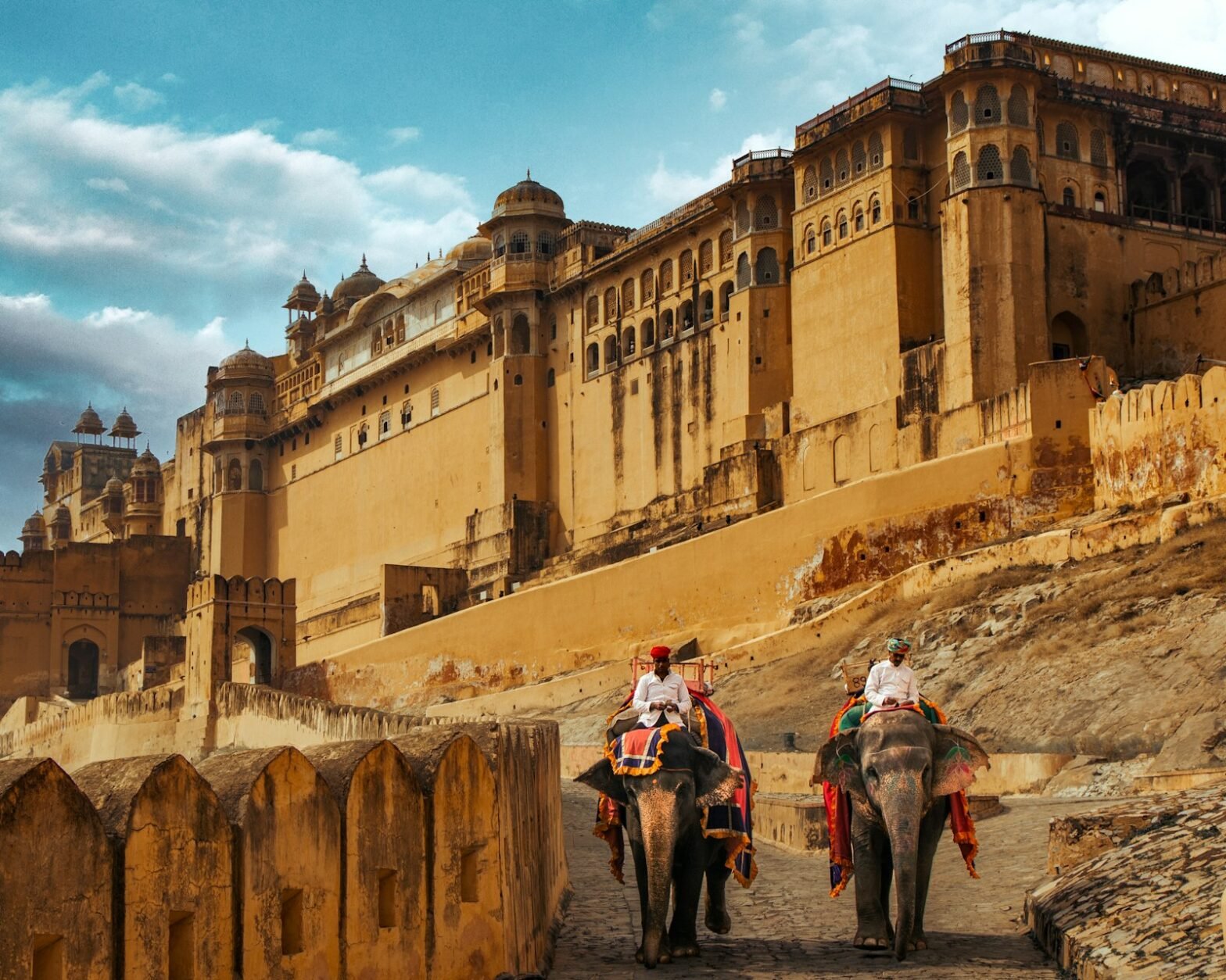
Golden Triangle India: The Complete Delhi, Agra and Jaipur Itinerary
The Golden Triangle India route links three of the country’s most rewarding cities: Delhi, Agra and Jaipur. On a map the three form a rough triangle, each leg a few hours by road or rail, which makes it the most practical way to see Mughal monuments, Rajput forts and the bustle of a modern capital in a single trip. This guide gives you day-by-day itineraries, transport options, timing advice and the paperwork you need, including how to apply for your India e-Tourist Visa online before you fly.
Key takeaways
- The Golden Triangle connects Delhi, Agra and Jaipur and suits first-time visitors perfectly.
- Allow at least five days; seven gives a comfortable pace, and ten lets you add an extension such as Ranthambore or Varanasi.
- The Taj Mahal is closed to general visitors on Fridays, so plan your Agra days around it.
- October to March offers the most pleasant weather for sightseeing.
- Most travellers arrive at Delhi airport on an e-Tourist Visa and must also complete the e-Arrival Card before landing.
What is the Golden Triangle?
In fact, the name describes a circuit rather than a region. You start in Delhi, travel south-east to Agra on the banks of the Yamuna, then head west to Jaipur, the capital of Rajasthan, before returning to Delhi. Each city represents a different chapter of Indian history: Delhi for the layered legacy of sultanates, Mughals and the British Raj; Agra for the peak of Mughal architecture; and Jaipur for the pink-walled splendour of the Rajput maharajas.
Why it is the classic first trip to India
The distances are short, the infrastructure is well developed for visitors and the density of world-class sights is remarkable. Within a week you can see three UNESCO World Heritage properties in Agra alone (the Taj Mahal, Agra Fort and Fatehpur Sikri), plus Humayun’s Tomb, the Qutub Minar complex and the Red Fort in Delhi, and Jaipur’s Amber Fort and Jantar Mantar. For a wider overview of regions, seasons and customs, our complete guide to travelling in India is a good companion to this itinerary.
How many days do you need for the Golden Triangle India route?
| Trip length | Delhi | Agra | Jaipur | Best for |
|---|---|---|---|---|
| 5 days | 1.5 days | 1 day | 2 days | Short breaks or add-ons to a business trip |
| 7 days | 2 days | 1.5 days | 2.5 days | Most first-time visitors |
| 10 days | 2.5 days | 1.5 days | 3 days + extension | Travellers who want Ranthambore, Pushkar or Varanasi too |
5-day Golden Triangle itinerary
- Day 1 – Delhi: Arrive, rest, then an afternoon at Humayun’s Tomb and an evening stroll around India Gate.
- Day 2 – Delhi to Agra: Morning in Old Delhi (Jama Masjid, Chandni Chowk, the Red Fort from outside or inside), then an afternoon train or drive to Agra. Sunset at Mehtab Bagh.
- Day 3 – Agra to Jaipur: Taj Mahal at sunrise, Agra Fort mid-morning, then drive to Jaipur with a stop at Fatehpur Sikri.
- Day 4 – Jaipur: Amber Fort early, then City Palace, Jantar Mantar and Hawa Mahal.
- Day 5 – Jaipur to Delhi: A morning in the bazaars, then return to Delhi for your onward flight.
7-day Golden Triangle itinerary
- Day 1: Arrive in Delhi and recover from the flight.
- Day 2: Old Delhi by cycle rickshaw, Jama Masjid, Red Fort, then Raj Ghat.
- Day 3: New Delhi: Qutub Minar, Humayun’s Tomb, India Gate and Lodhi Garden.
- Day 4: Travel to Agra; afternoon at Agra Fort, sunset at Mehtab Bagh.
- Day 5: Taj Mahal at sunrise, then Fatehpur Sikri en route to Jaipur.
- Day 6: Jaipur: Amber Fort, Jaigarh or Nahargarh, and an evening viewpoint over the city.
- Day 7: City Palace, Jantar Mantar, Hawa Mahal, then back to Delhi.
10-day itinerary with an extension
Follow the seven-day plan, then add three days: either Ranthambore for tiger safaris (roughly between Jaipur and Agra by rail or road), Pushkar for its lake and ghats, or a flight to Varanasi or Udaipur before returning to Delhi. If you expect to return to India, consider a 1-year or 5-year option when you request a multiple-entry India e-Tourist Visa.
Delhi highlights
Delhi rewards those who split it into two halves. Old Delhi is the Mughal city of Shahjahanabad: the Red Fort with its sandstone walls, the vast courtyard of Jama Masjid, and the lanes of Chandni Chowk, where spice markets and street kitchens crowd together.
New Delhi is broader and greener. Humayun’s Tomb is often described as the architectural forerunner of the Taj Mahal and is at its best in late-afternoon light. The Qutub Minar complex in the south of the city holds a soaring minaret and some of the earliest Islamic monuments in India. Finally, finish at India Gate, the war memorial at the end of Kartavya Path.
Agra: the Taj Mahal and beyond
Taj Mahal at sunrise
The official Taj Mahal website states that the monument opens 30 minutes before sunrise and closes 30 minutes before sunset, and that it is closed on Fridays for general viewing. Above all, sunrise is the magic hour: softer light on the marble, cooler temperatures and thinner crowds. Arrive early and carry little, because security screening is thorough. The Taj Mahal is a UNESCO World Heritage Site, and so is the walled city of Jaipur.
Agra Fort, Mehtab Bagh and Fatehpur Sikri
Agra Fort is a red sandstone citadel with palaces, audience halls and a view of the Taj across the river. Mehtab Bagh, a garden on the opposite bank, is a calm spot for sunset views of the Taj and works well on a Friday when the monument itself is closed. Fatehpur Sikri, the abandoned Mughal capital built by Akbar, lies about an hour west of Agra and fits neatly into the drive to Jaipur.
Jaipur: the Pink City
Start with Amber Fort (also spelled Amer), perched above Maota Lake; arriving at opening time means cooler walls and fewer tour groups. In the old city, the City Palace is still partly home to the former royal family, while Jantar Mantar, an 18th-century astronomical observatory with giant stone instruments, is a UNESCO World Heritage Site. Then, photograph the honeycomb façade of Hawa Mahal from the cafés across the road in the morning.
Optional extensions
- Ranthambore: A national park famous for tiger sightings, reachable from Jaipur or Agra via Sawai Madhopur.
- Pushkar: A small, sacred lake town near Ajmer, known for its ghats and relaxed pace.
- Udaipur: The “city of lakes”, a short flight from Jaipur or Delhi, with palaces reflected in Lake Pichola.
- Varanasi: One of the world’s oldest living cities, where the rituals on the Ganges ghats are unforgettable.
Getting between Delhi, Agra and Jaipur
By train
India’s fast day trains are the most comfortable way to cover the Delhi–Agra leg. The Gatimaan Express runs between Hazrat Nizamuddin in Delhi and Agra Cantt, and railway announcements have stated that it operates six days a week, not on Fridays. Several Vande Bharat Express services also stop at Agra Cantt, and Vande Bharat and Shatabdi Express trains link Delhi with Jaipur. Timetables, departure stations (New Delhi, Hazrat Nizamuddin or Delhi Cantt) and running days change, so check the current schedule on Indian Railways before you book, and reserve seats early in peak season.
By road
The Yamuna Expressway connects Greater Noida with Agra and makes the drive from Delhi straightforward. Newer expressway sections have also shortened the route from Delhi towards Jaipur, while Agra to Jaipur follows a national highway past Fatehpur Sikri and the stepwell at Abhaneri. However, journey times depend heavily on traffic leaving Delhi.
Private car with driver
Many visitors hire a car with a driver for the full Golden Triangle India circuit. It is flexible, lets you stop at Fatehpur Sikri and Abhaneri, and also removes the stress of stations. In addition, agree the itinerary in writing before you set off.
Best time to visit the Golden Triangle India circuit
The most comfortable season runs from October to March, when days are warm and dry. December and January can bring cold mornings and fog in Delhi and Agra, which occasionally delays trains and hides the Taj at dawn. April to June is very hot, and the monsoon from roughly July to September brings humidity and downpours, although the landscapes turn green.
Food to try
- Delhi: Parathas in Old Delhi, butter chicken, chaat and kebabs near Jama Masjid.
- Agra: Petha (a translucent sweet) and Mughlai curries.
- Jaipur: Dal baati churma, laal maas, pyaaz kachori and lassi.
Stick to busy stalls, freshly cooked dishes and bottled or filtered water, especially in your first few days.
Etiquette and practical tips
- Dress modestly: Cover shoulders and knees at religious sites; a light scarf is useful for women and men alike.
- Shoes off: Remove footwear before entering temples, mosques and some mausoleum interiors. Socks help on hot marble.
- Photography: Ask before photographing people. Some monuments restrict tripods, drones or photography inside certain halls.
- Pace yourself: Start early, rest at midday and sightsee again in the late afternoon.
Which visa do you need for a Golden Triangle India trip?
Most leisure travellers use the e-Tourist Visa, which is issued as an Electronic Travel Authorisation (ETA) that you present on arrival. The official e-Visa portal lists three durations:
| e-Tourist Visa option | Entries | Key condition |
|---|---|---|
| 30 days | Multiple entry within 30 days of first arrival | Non-extendable and non-convertible |
| 1 year | Multiple | Maximum 180 days’ stay per calendar year for most nationalities |
| 5 years | Multiple | Maximum 180 days’ stay per calendar year for most nationalities |
Your passport should be valid for at least six months from the date of application and have at least two blank pages for immigration stamps. Apply at least four days before arrival; the official portal allows applications up to 120 days ahead. If you are combining sightseeing with meetings, you can instead start your India e-Business Visa application, which the official portal describes as valid for one year with multiple entries.
Small errors are the most common cause of delays, so read our advice on avoiding common mistakes in your India eVisa application before you submit.
Arriving at Delhi airport
Indira Gandhi International Airport in Delhi is the natural starting point for the Golden Triangle and is an authorised e-Visa entry point. Carry a printed or digital copy of your ETA and the passport you used to apply. You should also complete the e-Arrival Card online within the 72 hours before you land; it is a separate arrival declaration, not a visa. When your dates are set, you can complete your e-Tourist Visa form for India and keep a copy of the approval with your travel documents.
Related guides: you may also find these articles useful: the India eVisa guide for US citizens, the India eVisa guide for UK citizens and how long India eVisa processing usually takes.
Frequently asked questions
Is seven days enough for the Golden Triangle India trip?
Yes. Seven days allows two full days in Delhi, an unhurried Taj Mahal sunrise and time to explore Jaipur properly.
What day is the Taj Mahal closed?
The Taj Mahal is closed to general visitors on Fridays. Use Friday for Mehtab Bagh, Agra Fort, Fatehpur Sikri or travel.
Should I take the train or hire a driver?
Trains are fast and comfortable for Delhi–Agra and Delhi–Jaipur. A car with driver is better for Agra–Jaipur because you can stop at Fatehpur Sikri and Abhaneri on the way.
Which e-Tourist Visa should I choose for a one-week trip?
The 30-day option covers a single Golden Triangle holiday. If you plan to return to India within a year or more, the 1-year or 5-year multiple-entry options can be more convenient.
Can I enter India at Delhi with an e-Visa?
Yes. Delhi’s Indira Gandhi International Airport is one of the designated e-Visa entry airports.
Do I need the e-Arrival Card as well as my e-Visa?
Yes. The e-Arrival Card is a separate online declaration that foreign visitors complete within 72 hours before arriving in India.
Plan your Golden Triangle India journey
The Golden Triangle India circuit packs extraordinary history, architecture and food into a compact, manageable route. Choose the itinerary length that suits you, build your Agra days around the Friday closure, and travel between October and March for the best conditions. Once your plans are clear, apply online for your India e-Visa in good time, fill in the e-Arrival Card before you land, and you will be ready to enjoy Delhi, Agra and Jaipur at your own pace.
India eVisa Gate is a private, independent service and is not affiliated with the Government of India. Visa rules can change; always check the conditions printed on your Electronic Travel Authorisation before you travel.