Travel to India: The Complete Guide to Visiting, Doing Business and Moving to India
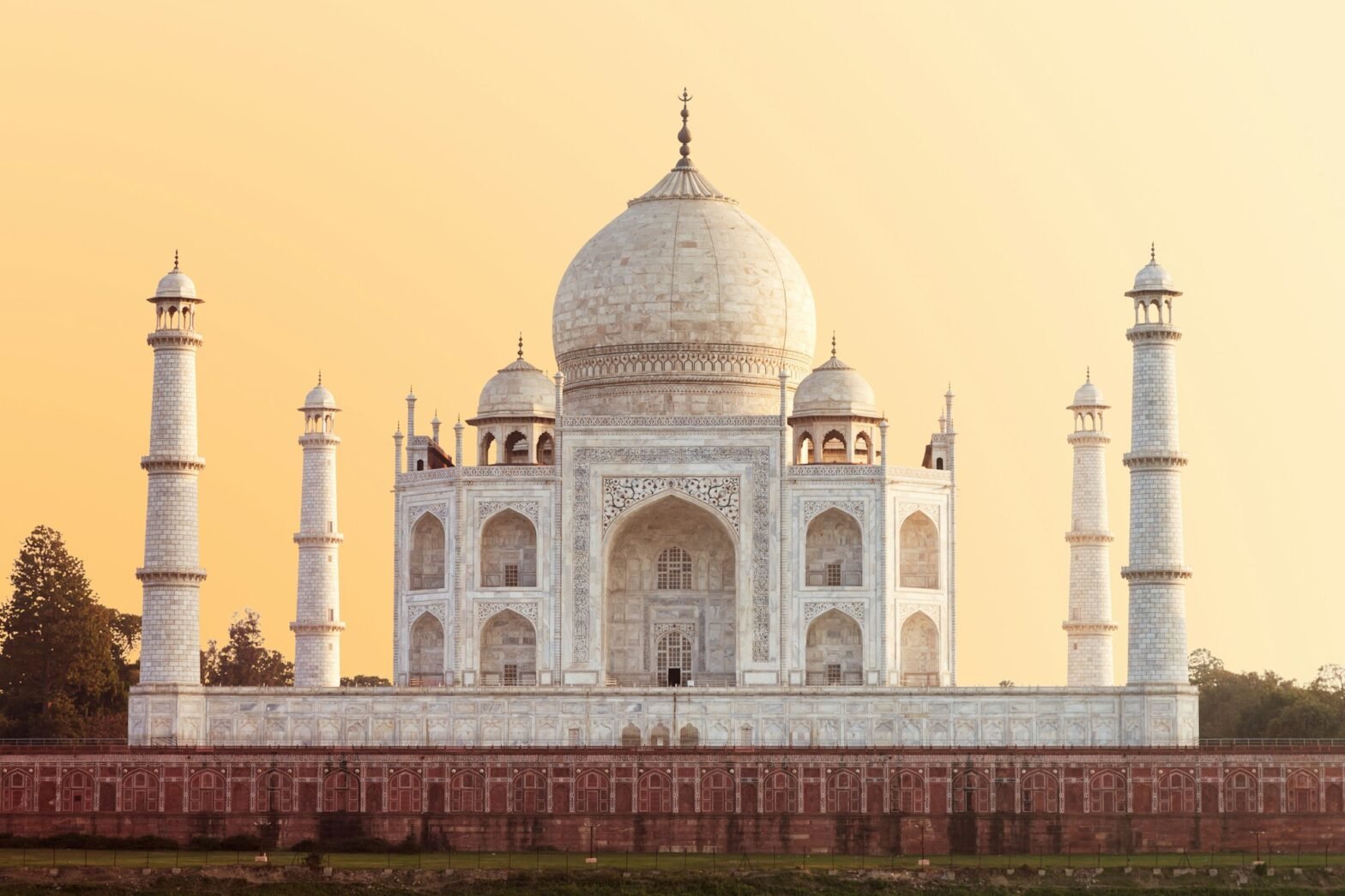
India is not a destination you simply visit — it is one you experience with every sense. From the marble silence of the Taj Mahal at dawn to the backwaters of Kerala, India offers endless contrasts. Its trading floors in Mumbai and tech campuses in Bengaluru draw business visitors too. Every year, the country attracts tens of millions of international travellers, entrepreneurs and new residents. Whether you are planning a first holiday, business meetings or a long-term move, one thing never changes. Before you travel to India, you need the right travel authorisation.
How to use this travel to India guide
This complete guide to travel to India brings everything together in one place. You will learn how the Indian visa system works, what the India e-Tourist Visa and the India e-Business Visa allow you to do, which documents you need, how to reach India by air, sea or land, how to get around once you arrive, which regions to explore, and what the realistic routes are if you want to live, work or study in India. Bookmark it: we wrote it to be the only India travel resource you need.
Key takeaways
- Citizens of more than 160 countries can apply for an India e-Visa entirely online, without visiting an embassy.
- The e-Tourist Visa covers holidays, sightseeing, visits to friends and family, short yoga programmes and similar leisure activities.
- The e-Business Visa covers meetings, trade fairs, sales, sourcing, recruitment, technical work on projects and setting up a business venture.
- Your passport must be valid for at least six months from your arrival date and have at least two blank pages.
- Apply at least four days before your arrival — earlier is always safer.
- You cannot extend an e-Visa or convert it into another category. It is also not a route to live or work in India long term.
Table of contents
- Why travel to India now
- How the Indian visa system works
- The India e-Tourist Visa explained
- The India e-Business Visa explained
- e-Tourist or e-Business: which visa do you need?
- How to apply for your India e-Visa, step by step
- How to travel to India: by air, by sea and by land
- Arriving in India: immigration and the e-Arrival Card
- Getting around India
- Where to go: India’s regions and the best time to visit
- Practical tips when you travel to India: health, safety, connectivity and etiquette
- Doing business in India: culture and best practices
- Moving to India: the routes to live, work and study
- Settling in India: registration and everyday life
- Common mistakes to avoid when you travel to India
- Frequently asked questions
Why travel to India now
Few countries offer the sheer variety that India does. Within a single trip you can walk through Mughal palaces and meditate in a Himalayan monastery. You can also sleep on a houseboat, ride a toy train through tea plantations and finish on a white-sand beach. India has more than 40 UNESCO World Heritage Sites and 22 officially recognised languages. It also has some of the world’s oldest living cities, and its food changes completely every few hundred kilometres.
Easier to reach than ever
Travelling to India has also never been easier. Over the last decade the country has invested massively in new airports and high-speed expressways. It has also built modern metro systems in its major cities and a new generation of semi-high-speed trains. Digital payments, app-based taxis and online booking platforms are now part of daily life, even in smaller towns. And, above all, the India electronic visa has replaced the old paper process for most visitors: instead of queuing at a consulate, you fill in a form online and receive your authorisation by email.
A hub for business and new residents
India is also one of the world’s fastest-growing major economies. International companies source components, software, textiles, pharmaceuticals and services from India every day. Meanwhile, global conferences and trade fairs fill the calendars of New Delhi, Mumbai, Bengaluru, Hyderabad and Chennai. For business travellers, a short trip to meet suppliers, partners or clients often comes first. It can be the start of a long-term relationship with the Indian market.
Finally, more and more foreigners choose to settle in India. They come as employees of multinational companies, founders of start-ups, researchers, students or spouses of Indian citizens. Others are members of the global Indian diaspora returning to their roots. Whatever your reason for coming, the journey starts with the same question: which visa do you need?
How the Indian visa system works
Almost every foreign national needs a visa or an equivalent authorisation to enter India. The main exceptions are citizens of Nepal and Bhutan, and holders of an Overseas Citizen of India (OCI) card. Everyone else has to choose between three main options.
1. The India e-Visa (Electronic Travel Authorisation)
The e-Visa is the simplest and most popular option for short stays. You request it online and the Indian immigration authorities examine it electronically. You then receive it by email as an Electronic Travel Authorisation (ETA). There is no need to post your passport or book an appointment. On arrival, the immigration officer checks your ETA, takes your biometric data and stamps your passport.
The e-Visa family includes several categories. The most widely used are:
- e-Tourist Visa — for holidays, sightseeing, visiting family and friends, short yoga retreats and similar activities.
- e-Business Visa — for commercial and professional activities that do not involve a job with an Indian organisation.
- e-Medical Visa and e-Medical Attendant Visa — for patients travelling for treatment and the people accompanying them.
- e-Conference Visa — for delegates attending conferences, seminars or workshops organised by government bodies or approved institutions.
Over recent years India has also introduced additional electronic categories (for example for students, transit passengers and film productions). The Tourist and Business categories, however, remain by far the most requested. They are the two categories our team assists with every day.
2. The regular (paper) visa
Some situations still require a traditional visa from an Indian embassy, high commission or consulate. These include long-term employment, full-time study, journalism, missionary work, research, or any purpose outside the e-Visa. Travellers who are not eligible for the e-Visa also need a regular visa. The same applies if you want to enter India through a land border that does not accept e-Visa holders. The process involves an online form, supporting documents and, in most countries, a visit to a visa application centre.
3. The OCI card and visa on arrival
The Overseas Citizen of India (OCI) card is a lifelong, multiple-entry status reserved for foreign nationals of Indian origin, their descendants and the foreign spouses of Indian citizens or OCI holders (under certain conditions). It is not a visa for everyone. But if you qualify, it is the most flexible way to live in and travel to India.
A limited visa-on-arrival facility also exists for a small number of nationalities, such as Japan, South Korea and — under conditions — the United Arab Emirates. Even for these travellers, applying for an e-Visa in advance is usually the more comfortable option. You land with a confirmed authorisation instead of depending on a process at the airport.
Who is eligible for the India e-Visa?
The e-Visa is open to nationals of the vast majority of countries. These include the United States, the United Kingdom, Canada, Australia, New Zealand and every member state of the European Union. The list also covers Switzerland, Norway, Japan, South Korea, Singapore and the Gulf states. Most of Latin America and much of Africa and Asia qualify too. A few important conditions apply to every applicant:
- You must hold an ordinary passport. Diplomatic and official passport holders, and holders of international travel documents other than a passport, must apply for a regular visa.
- Each traveller needs their own passport — children who are listed on a parent’s passport are not eligible.
- Travellers holding a Pakistani passport, or of Pakistani origin, must apply for a regular visa at an Indian mission.
- You must enter India through one of the airports or seaports designated for e-Visa holders.
If you are unsure about your eligibility, the safest approach is to start your India e-Visa application and let our team review it: we check eligibility and the consistency of your information before anything is submitted.
The India e-Tourist Visa explained
The e-Tourist Visa is the authorisation most visitors need. It suits people whose only purpose in India is leisure. That means discovering the country, relaxing, visiting loved ones or following a short wellness programme.
What the e-Tourist Visa allows you to do
- Sightseeing, recreation and holidays anywhere in India (outside protected and restricted areas, which require an additional permit — see below).
- Casual visits to meet friends or relatives.
- Attending a short-term yoga programme or a retreat, provided it does not lead to a formal qualification.
- Short courses on local languages, music, dance, arts and crafts, cooking or similar subjects, of limited duration and not leading to a formal degree.
- Short-term voluntary work that does not involve payment of any kind.
- Short-duration medical treatment, including under Indian systems of medicine such as Ayurveda. For longer or more serious treatment, the e-Medical Visa is the appropriate category.
What you cannot do on an e-Tourist Visa is equally important: you may not take up employment, run commercial activities, attend business meetings as a representative of your company, carry out journalism or filming, undertake missionary activities or enrol in a full-time study programme.
Validity and length of stay
The e-Tourist Visa exists in several versions, and the one you choose determines how long and how often you can travel:
- 30-day e-Tourist Visa — valid for 30 days from your first arrival in India, with multiple entries during that period. It suits a single holiday of up to one month.
- 1-year e-Tourist Visa — valid for 365 days from the grant of the ETA, with multiple entries.
- 5-year e-Tourist Visa — valid for five years from the grant of the ETA, with multiple entries.
Stay limits for the 1-year and 5-year visas
For the 1-year and 5-year versions, your total stay in India must not exceed 180 days within a calendar year. In addition, each continuous stay generally has a 90-day limit. Nationals of the United States, the United Kingdom, Canada and Japan are the exception. They may stay up to 180 days per visit. Certain nationalities must also leave a minimum gap between two visits. Always read the conditions printed on your ETA carefully. The validity of the visa is the period during which you can enter. It is not the same thing as the permitted length of each stay.
The e-Tourist Visa is non-extendable and non-convertible. If your plans change and you need to stay longer or do something different, leave India first. Then apply for the appropriate visa.
Planning a holiday, a family visit or a spiritual retreat? You can apply for your India e-Tourist Visa online in a few minutes, and our team will check every detail before submission.
Requirements and documents for the e-Tourist Visa
To complete your application you will need:
- Your passport — valid for at least six months from your date of arrival in India, with at least two blank pages for the entry and exit stamps.
- A scan of the passport’s biographical page — the page with your photograph and personal details, clear and fully legible.
- A recent digital photograph — square format, in colour, taken from the front with your full face visible, eyes open, neutral expression, against a plain white or light background, without glasses, shadows or head coverings (except for religious reasons).
- Your travel details — expected date of arrival, the airport or seaport where you will land, and an address or contact in India (a hotel is fine).
- Personal and family information — including your place of birth, nationality, occupation, marital status and the names of your parents.
- A valid email address — the authorities send the ETA by email only.
Also be ready to show a return or onward ticket if the immigration officer asks. You may need proof of sufficient means of support during your stay too.
How early should you apply?
You must apply at least four days before your arrival date, and you can apply well in advance for the longer-validity versions. In practice, we recommend submitting your application as soon as you confirm your travel dates. The authorities process most applications quickly. But if you need to re-upload a photo or a document, those extra days make all the difference.
The India e-Business Visa explained
India is a major destination for international trade. The e-Business Visa exists for professionals who need to be on the ground for a limited period. It does not cover a job in India.
What the e-Business Visa allows you to do
The e-Business Visa covers a wide range of professional activities, including:
- Setting up an industrial or business venture, or exploring the possibility of doing so.
- Selling, purchasing or trading goods and services.
- Attending technical or business meetings with Indian companies or partners.
- Recruiting staff and conducting interviews.
- Participating in exhibitions, trade fairs and business fairs.
- Working as an expert or specialist in connection with an ongoing project, for example to install, commission or maintain equipment.
- Conducting tours for business purposes.
- Delivering lectures under recognised academic programmes.
- Sports-related activities of a professional or commercial nature, under specific conditions.
The e-Business Visa does not allow you to take up employment with an Indian company or to receive a salary from an Indian source. If an Indian entity is hiring you, you need an Employment Visa. This is a regular visa (see the section on moving to India below).
Validity and length of stay
The e-Business Visa is valid for one year from the grant of the ETA, with multiple entries. Each continuous stay may not exceed 180 days. If you intend to stay longer than 180 days, you must register with the Foreigners Regional Registration Office (FRRO). The authorities tightened the registration rules recently, so start the process well before the 180-day mark. Bear in mind that stays beyond that limit are only possible in specific circumstances. Most business travellers come for a few days or weeks at a time, so the multiple-entry format is ideal. You can return for follow-up meetings, audits or trade fairs throughout the year without applying again.
Like all e-Visas, the e-Business Visa has no extension beyond its validity and no conversion into another category.
If meetings, trade fairs or supplier visits are on your agenda, you can start your India e-Business Visa application here and let our specialists review it for consistency before submission.
Requirements and documents for the e-Business Visa
The e-Business Visa requires everything listed for the e-Tourist Visa — passport, passport scan, photograph, travel details and personal information — plus two professional documents:
- A business card — or, if you do not have one, an email signature or an official letter showing your name, position and company details.
- An invitation letter from the Indian company or organisation you are visiting — stating the purpose of your visit, the dates, the name of the host company and the contact person, on the company’s letterhead.
All supporting documents must be in English. Documents in other languages are a common cause of rejection. So ask your Indian partner to prepare the invitation letter in English from the start. The form also asks about your own employer. It then needs the name, address and website of the Indian company you are visiting.
Can you combine tourism and business?
Yes. Holders of an e-Business Visa can generally carry out tourist activities during their stay. For example, you can go sightseeing at the weekend after a trade fair. The reverse is not true: an e-Tourist Visa does not cover business activities. If your trip includes any professional purpose, choose the e-Business Visa.
e-Tourist or e-Business: which visa do you need?
The choice depends entirely on the main purpose of your trip. Immigration officers can ask you about your activities on arrival. A mismatch between your visa category and your real activities can lead to refusal of entry. It can also cause problems on future applications. The table below summarises the key differences.
| e-Tourist Visa | e-Business Visa | |
|---|---|---|
| Main purpose | Holidays, sightseeing, family visits, yoga, short courses | Meetings, trade fairs, sales, sourcing, recruitment, projects |
| Versions | 30 days, 1 year, 5 years | 1 year |
| Entries | Multiple (all versions) | Multiple |
| Maximum stay | 30 days, or 180 days per calendar year for 1 and 5 years | 180 days per continuous stay |
| Extra documents | None | Business card and invitation letter in English |
| Tourism allowed | Yes | Yes, alongside business activities |
| Business allowed | No | Yes |
| Paid employment in India | No | No |
A few practical rules of thumb:
- Visiting your company’s Indian subsidiary for a meeting? e-Business Visa.
- Attending a friend’s wedding in Jaipur? e-Tourist Visa.
- Travelling to a trade fair and then spending a week in Goa? e-Business Visa — it covers both.
- Taking a one-month yoga teacher training that leads to a certificate? Check carefully: courses leading to a formal qualification may require another category.
- Being hired by an Indian company? Neither — you need a regular Employment Visa.
Still unsure? Our team handles both categories every day. Simply apply for your India e-Visa for tourism or business, then indicate the purpose of your trip: we will make sure the category matches your plans before we submit your file.
How to apply for your India e-Visa, step by step
The application is entirely online. With your documents ready, it usually takes between 10 and 20 minutes. Here is how it works with our service.
Step 1 — Prepare your documents
Before you start, gather your passport and a scan of its photo page. You also need a digital photograph that meets the specifications above, your travel dates and your arrival point. For an e-Business Visa, also have your business card and your invitation letter in English ready.
Step 2 — Complete the online form
The form asks for your travel details: arrival point in India and dates. It then asks for your identity exactly as it appears in your passport. It also covers your place of birth, nationality, education and occupation, plus information about your parents and spouse. Finally, it asks about your previous visits to India and neighbouring countries, and your contacts in India and at home. Every answer must match your passport and supporting documents exactly.
Step 3 — Review and verification
This is where we catch most errors. Our team checks the consistency of your information, the quality of your photograph and scans, and the category you have chosen. If something needs correcting, we contact you before the application goes any further.
Step 4 — Processing by the immigration authorities
Once you submit your application, the Indian immigration authorities examine it. The authorities process most applications within a few hours to 72 hours. Some take longer, particularly in peak season or when they need additional verification. If a document or photograph is not acceptable, the authorities may ask you by email to upload it again.
Step 5 — Receive your ETA by email
You receive your Electronic Travel Authorisation by email. Check that every detail (name, date of birth, passport number, nationality) is correct. Then print a copy and keep a digital copy on your phone. Airlines check your authorisation at check-in, and you will present it to the immigration officer on arrival.
Tips for a smooth application
- Enter your names exactly as they appear in the machine-readable zone of your passport.
- Use a photograph taken specifically for the application — cropped selfies and scans of old passport photos are a leading cause of delays.
- Make sure your passport scan shows the full page, including the two lines of characters at the bottom.
- Answer the background questions truthfully — officers treat inconsistencies far more seriously than a “yes” answer with an explanation.
- Travel with the same passport you used for the application. If you renew your passport after receiving your ETA, carry the old passport as well.
How to travel to India: by air, by sea and by land
By air
Air travel is by far the most common way to reach India. As an e-Visa holder, you must arrive through one of the designated international airports. The main gateways are:
- Delhi — Indira Gandhi International Airport (DEL): the country’s busiest airport and the natural entry point for the Golden Triangle (Delhi, Agra, Jaipur), Rajasthan, Varanasi and the Himalayas.
- Mumbai — Chhatrapati Shivaji Maharaj International Airport (BOM): India’s financial capital and the gateway to Maharashtra, Goa and the west coast.
- Bengaluru — Kempegowda International Airport (BLR): the heart of India’s technology sector and a convenient entry point for Karnataka, Mysuru and the south.
- Chennai (MAA) for Tamil Nadu and its temple towns, Hyderabad (HYD) for Telangana and the tech and pharmaceutical industries, and Kolkata (CCU) for West Bengal, Darjeeling, Sikkim and the North-East.
- Kochi (COK) and Thiruvananthapuram (TRV) for Kerala, and Goa for the beaches of the west coast.
Dozens of international carriers serve India directly from Europe, North America, the Middle East, Africa and Asia. Many more routes need only a single connection through the major Gulf and Asian hubs. When you fill in your application, you indicate your expected arrival point: choose the airport printed on your ticket.
By sea
India welcomes a growing number of international cruises, particularly between October and April. e-Visa holders can arrive at the designated seaports, which include Mumbai, Chennai, Kochi, Mormugao (Goa) and New Mangalore. Your cruise line will normally explain how immigration works on board or at the terminal. Make sure your e-Visa is in place before departure.
By land
India shares land borders with Pakistan, Nepal, Bhutan, Bangladesh, Myanmar and China. Most land crossings are not open to e-Visa holders, and several have specific rules for foreigners. Planning an overland journey, for example from Nepal or Bangladesh? Check in advance whether your chosen crossing accepts e-Visa holders. In many cases, you will need a regular visa from an Indian mission.
Arriving in India: immigration and the e-Arrival Card
India has modernised its arrival process. Foreign nationals now complete an e-Arrival Card online during the 72 hours before their arrival, instead of the paper disembarkation card. It is a declaration of your arrival information, not a visa, so you still need your ETA. Completing it in advance saves time at the airport. Keep the confirmation on your phone.
On arrival:
- Follow the signs to the immigration counters dedicated to e-Visa holders.
- Present your passport, a copy of your ETA and, if requested, your return ticket, accommodation details and proof of sufficient means.
- Officers will take your fingerprints and photograph. They will then stamp your passport with the entry date and the conditions of your stay.
- Proceed to baggage collection and customs. Declare any items that require it, and be aware that some goods (for example satellite phones and drones) are subject to strict rules.
Travellers arriving from — or having transited through — countries where yellow fever is present may need to show a yellow fever vaccination certificate. Without it, the authorities may place you in quarantine, so check this point with a travel health clinic before departure.
Getting around India
India is a vast country — roughly 3,200 kilometres from north to south — so planning how you move between destinations is part of the adventure.
Domestic flights
A dense network of domestic airlines connects all major cities and many smaller ones. For long distances, such as Delhi to Kochi or Mumbai to Kolkata, flying is the fastest option. Arrive early, because security checks at Indian airports are thorough. You will generally need to show your ticket and passport even to enter the terminal building.
Trains
Indian Railways is one of the largest railway networks in the world and an unforgettable way to see the country. Overnight trains in air-conditioned sleeper classes are comfortable and allow you to cover long distances while you sleep, while the modern Vande Bharat trains offer fast, air-conditioned day journeys between major cities. Popular routes book up weeks in advance, especially around holidays, so reserve early through the official booking platform or an authorised agent. For a special experience, the heritage mountain railways — the Darjeeling Himalayan Railway, the Nilgiri Mountain Railway and the Kalka–Shimla line — are UNESCO-listed.
Metro systems and city transport
Delhi, Mumbai, Bengaluru, Chennai, Hyderabad, Kolkata, Kochi, Jaipur, Lucknow and several other cities have modern metro systems. They are clean, air-conditioned and easy to use. App-based taxis and auto-rickshaws are widely available in cities and are usually the most convenient way to cover short distances. In smaller towns, agree on the route before you set off.
Roads and private drivers
India’s expressways have improved dramatically, but we do not recommend driving yourself. Traffic is dense, and road habits are very different from those in Europe or North America. Hiring a car with a driver for a few days is popular and comfortable. It lets you explore regions such as Rajasthan or Kerala at your own pace.
Where to go: India’s regions and the best time to visit
For extra inspiration, the official Incredible India tourism website covers every state in detail. Here are the regions most visitors start with.
The Golden Triangle: Delhi, Agra and Jaipur
The classic first trip to India links three cities in a compact loop. Delhi combines Old Delhi’s bazaars and the Red Fort with the wide avenues of New Delhi, Humayun’s Tomb and the Qutub Minar. Agra is home to the Taj Mahal, best seen at sunrise, as well as Agra Fort and nearby Fatehpur Sikri. Jaipur, the “Pink City”, offers the Amber Fort, the City Palace and the extraordinary Jantar Mantar observatory.
Rajasthan: forts, deserts and palaces
Beyond Jaipur, Rajasthan unfolds like a storybook: the lakes and palaces of Udaipur, the blue lanes of Jodhpur beneath Mehrangarh Fort, the golden desert citadel of Jaisalmer, the sacred lake of Pushkar and the tiger reserve of Ranthambore.
Varanasi and the Ganges
Varanasi, one of the oldest continuously inhabited cities in the world, is the spiritual heart of India. Watch the evening ceremony on the ghats, take a boat on the Ganges at dawn and visit nearby Sarnath, where the Buddha gave his first sermon.
Kerala: backwaters, spices and Ayurveda
In the far south-west, Kerala offers houseboat cruises on the backwaters around Alappuzha, tea plantations in Munnar, the historic port of Fort Kochi, wildlife in Periyar and some of the best Ayurvedic centres in the country.
Goa and the west coast
Goa blends beaches, Portuguese heritage, whitewashed churches and a relaxed lifestyle. Further south, the coast of Karnataka — Gokarna, Udupi and the ruins of Hampi inland — is quieter and just as beautiful.
Tamil Nadu: temple country
The great Dravidian temples of Madurai, Thanjavur and Kanchipuram, the shore temples of Mahabalipuram, the French quarter of Puducherry and the hill station of Ooty make Tamil Nadu a region for culture lovers.
The Himalayas: Ladakh, Himachal Pradesh and Uttarakhand
For mountains, head north. Ladakh, with Leh, its monasteries and high-altitude lakes, feels like another world. Himachal Pradesh offers Shimla, Manali and the Tibetan community of McLeod Ganj, while Uttarakhand is home to Rishikesh, the world capital of yoga, and to trekking routes in the Garhwal Himalaya.
The North-East and the islands
The seven states of the North-East — including Sikkim, Meghalaya, Assam and Arunachal Pradesh — are among the least visited and most rewarding regions of India. The Andaman and Nicobar Islands offer turquoise water and diving. Note that some of these areas require an additional Protected Area Permit (PAP) or Restricted Area Permit (RAP), or an Inner Line Permit, on top of your visa. Your e-Visa alone does not give access to them, so organise the permit before you go.
When is the best time to travel to India?
- October to March is the most pleasant period for most of the country, with warm days, cool nights and little rain. It is peak season in Rajasthan, Goa, Kerala and the Golden Triangle.
- April to June is hot on the plains, with temperatures often above 40 °C in the north. It is, however, the ideal season for the Himalayan hill stations.
- June to September is the monsoon season. The landscapes turn green and the crowds disappear, but heavy rain can disrupt travel. It is also the best time for Ladakh, which lies in a rain shadow.
India’s festivals can also shape your trip: Diwali (the festival of lights, in October or November), Holi (the festival of colours, in March), the Pushkar Camel Fair and the great religious gatherings are spectacular — but transport and accommodation book up fast around them.
Once your itinerary and dates are clear, request your Tourist e-Visa for India early — the multiple-entry 1-year and 5-year versions are ideal if you already know you will want to come back.
Practical tips when you travel to India: health, safety, connectivity and etiquette
Health
Visit a travel health clinic four to eight weeks before departure. Review your routine vaccinations and discuss any extra ones for your itinerary. Drink bottled or filtered water, avoid ice of unknown origin at first, and ease into spicy food gradually. Pack a basic medical kit and any prescription medicines you need, in their original packaging with a copy of the prescription. We strongly recommend comprehensive travel insurance that covers medical treatment and evacuation; India’s private hospitals in major cities are of an excellent standard.
Safety
Millions of travellers visit India safely every year. Apply the same common sense as anywhere else. Keep valuables out of sight in crowded places, and use registered taxis or app-based services, especially at night. Be wary of unsolicited offers from “guides” around major monuments and stations. Women travelling alone generally have positive experiences, and dressing modestly and choosing well-reviewed accommodation help avoid unwanted attention.
Staying connected
You can buy a local SIM card at the airport or in an official operator shop. Bring your passport, a photograph and your visa. Many travellers now use eSIMs as well. Mobile data coverage is excellent in cities and along major routes. Digital payments are everywhere in India. Hotels, restaurants and larger shops widely accept major international cards. Still, carry some cash for small purchases, markets and rural areas.
Etiquette and cultural respect
- The traditional greeting is “Namaste”, with palms pressed together. A handshake is common in business, but wait for a woman to offer her hand first.
- Remove your shoes before entering temples, mosques, gurdwaras and many homes.
- Dress modestly at religious sites — cover your shoulders and knees, and cover your head in gurdwaras and some mosques.
- Use your right hand to eat, give and receive.
- Always ask before photographing people, and respect signs forbidding photography at religious and military sites.
- Most of the country frowns upon public displays of affection.
Doing business in India: culture and best practices
India is a relationship-driven business environment. Understanding a few cultural codes will make your meetings more productive and help you build the trust that Indian partners value so highly.
Relationships come first
Indian business partners often want to know you before they commit. Expect small talk about family, travel and cricket before the agenda. Accept offers of tea or coffee, as they are a gesture of hospitality. You will often need several visits before anyone signs a deal, which is exactly why the multiple-entry e-Business Visa is so practical.
Hierarchy and decision-making
Senior leaders often make the decisions. Address people by their title and surname until invited to do otherwise, and identify early on who has the final say. Senior executives appreciate meeting counterparts of equivalent rank.
Communication style
English is the language of business across India. Communication tends to be polite and indirect: a “we will try” or “it should be possible” may mean there are obstacles. Confirm key points in writing after each meeting.
Practical points for business travellers
- Bring plenty of business cards and present them with your right hand.
- Schedule meetings in advance and confirm them a day or two before.
- Be aware of the Indian financial year (April to March) and major festivals such as Diwali, when many offices slow down.
- Traffic in large cities is unpredictable — allow generous margins between meetings.
- Keep your invitation letter and business card with you when you travel: immigration officers may ask about the purpose of your visit.
Heading to India for meetings, a trade fair or a supplier audit? Apply for your India Business e-Visa online as soon as your invitation letter is ready, so the authorisation is in your inbox well before your flight.
Moving to India: the routes to live, work and study
It is important to be clear about one point: neither the e-Tourist Visa nor the e-Business Visa allows you to live or work in India long term. They exist for temporary visits. If you plan to settle in India, you will need a long-term visa. You generally obtain it from an Indian embassy or consulate in your country of residence. Here are the main routes.
The Employment Visa
The Employment Visa is for highly skilled foreign professionals with a job at a company or organisation registered in India. It requires a signed employment contract and supporting documents from the employer. In general, it is for positions that a local hire cannot easily fill. It usually covers an initial period of up to one year, and you can then extend it in India. Volunteers working with registered non-profit organisations, and certain specialists, may also fall under this category.
Business Visa for entrepreneurs and investors
Foreign entrepreneurs who set up a company in India, or who invest in an Indian business, can use the regular Business Visa. It can cover longer periods than the e-Business Visa. Many founders make their first exploratory trips on an India e-Business Visa — to meet lawyers, accountants, potential partners and landlords — before applying for a longer-term visa once their project takes shape.
Student and research visas
Foreign students with a place on a full-time course at a recognised Indian institution apply for a Student Visa. It is generally valid for the duration of the course. Researchers and academics have their own Research Visa category. India’s leading institutes of technology, management schools and universities attract a growing number of international students.
The Entry (X) Visa and the OCI card
Foreign nationals of Indian origin, and foreign spouses and children of Indian citizens or OCI cardholders, may be eligible for an Entry Visa, which allows long stays for family and personal reasons. Those who qualify can then apply for the Overseas Citizen of India (OCI) card, which grants lifelong, multiple-entry travel to India, exemption from registration with the police, and parity with Indian residents in many economic and educational matters. The OCI card does not confer voting rights or the right to hold certain public offices. Some activities, such as research or journalism, still require special permission.
Retirement and long stays
India does not have a dedicated retirement visa for most nationalities. Retirees who wish to spend several months a year in India often use the 5-year India e-Tourist Visa, respecting the limit of 180 days per calendar year. Anyone who wants to reside in India continuously must qualify for one of the long-term categories above.
The legal framework
A new law that entered into force in 2025 consolidated India’s rules on immigration and foreigners. The implementing rules continue to evolve. If you are planning a move, check the latest requirements carefully and allow plenty of time for the process.
Settling in India: registration and everyday life
Registering with the FRRO
Foreigners staying in India on a long-term visa — generally those valid for more than 180 days, such as employment, student, research or entry visas — must register with the Foreigners Regional Registration Office (FRRO) or the local Foreigners Registration Office (FRO) shortly after arrival, usually within 14 days. The process is largely online through the e-FRRO portal. Registration gives you a residential permit, which you will need for many other steps. The FRRO also handles visa extensions and exit permits.
Finding accommodation
Most expatriates rent furnished or semi-furnished apartments through agents or online platforms. Leases typically run for eleven months and require a written rental agreement, which is important for your registration and for opening accounts. Popular expatriate neighbourhoods include South Delhi and Gurugram near Delhi, Bandra and Powai in Mumbai, Indiranagar and Whitefield in Bengaluru, and the Hitec City area in Hyderabad.
Banking, tax number and identity
To open a bank account as a foreign resident, you will usually need your passport, visa, FRRO registration and proof of address. You need a PAN card (Permanent Account Number) for many financial transactions and for tax purposes. Foreign residents who have lived in India for a qualifying period may also apply for an Aadhaar number, the biometric identity number widely used for everyday services.
Healthcare, schooling and daily life
India’s major cities have excellent private hospitals and clinics, and many expatriates take out international health insurance. Large cities also have international schools following British, American, International Baccalaureate and other curricula. Domestic help, food delivery apps and a vibrant cultural life make everyday life comfortable. Regional languages such as Hindi, Marathi, Kannada, Tamil, Telugu and Bengali are worth learning a few words of. People always appreciate the effort.
Common mistakes to avoid when you travel to India
- Choosing the wrong category — business activities on an e-Tourist Visa can lead to refusal of entry.
- A passport that expires too soon — you need six months of validity from your arrival date and two blank pages.
- Poor-quality photographs or scans — the most frequent cause of delays.
- Names that do not match the passport — including middle names and spelling differences.
- Applying too late — the four-day minimum is a minimum, not a recommendation.
- Arriving at the wrong entry point — e-Visa holders must use a designated airport or seaport.
- Overstaying — overstays can lead to penalties and difficulties with future visas.
- Forgetting special permits — protected and restricted areas require separate permits.
- Relying on a digital copy only — carry a printed copy of your ETA as well.
Related guides: you may also find these articles useful: our Golden Triangle India itinerary, our complete India e-Business Visa guide and how long India eVisa processing usually takes.
Frequently asked questions
How long does it take to get an India e-Visa?
The authorities process most applications within 72 hours, and many much faster. However, processing can take longer in peak season or when the authorities need additional checks. So apply at least four days before your arrival, and ideally as soon as you confirm your trip.
Can I enter India several times with the same e-Visa?
Yes, depending on the version. The 30-day, 1-year and 5-year e-Tourist Visas and the e-Business Visa all allow multiple entries during their validity. The limits on length of stay still apply.
Can I extend my e-Visa while I am in India?
No. e-Visas are non-extendable and non-convertible. Need to stay longer or change the purpose of your stay? You must leave India and apply for the appropriate visa. The only exception is a genuine emergency, which the FRRO handles.
Do children need their own e-Visa?
Yes. Every traveller, including babies and children, needs their own passport and their own India e-Visa application.
Can I work in India on an e-Business Visa?
No. The e-Business Visa covers business activities such as meetings, trade fairs, sales, sourcing and technical work on projects. It does not cover employment with an Indian organisation. Paid employment in India requires an Employment Visa.
Can I visit Ladakh, Sikkim or the Andaman Islands on an e-Visa?
You can visit many parts of these regions. However, some protected or restricted areas require an additional permit on top of your e-Visa. Check the permit requirements for your itinerary before you travel.
What happens if my passport expires after I receive my e-Visa?
The e-Visa belongs to the passport you used for the application. If you renew your passport, carry both the old and the new passport when you travel. Check the latest rules before departure, as in some cases you may need a new application.
Do I need to print my e-Visa?
We strongly recommend carrying a printed copy of your Electronic Travel Authorisation, even if you also keep a digital copy. Airlines and immigration officers may ask to see it.
Ready to travel to India?
India rewards every kind of traveller. Think of the first-time visitor discovering the Golden Triangle or the executive negotiating a partnership in Bengaluru. Think too of the yoga enthusiast in Rishikesh and the family preparing to build a new life in Mumbai. With the right visa, the right preparation and a little flexibility, your journey will be as smooth as it is unforgettable.
For holidays, family visits and wellness stays, the e-Tourist Visa is your key to the country. For meetings, trade fairs and business development, the e-Business Visa gives you the flexibility of multiple entries throughout the year. When you have set your dates, complete your India e-Visa application for tourism or business — our team will review every detail so that you can focus on the journey ahead.
India eVisa Gate is a private, independent service and is not affiliated with the Government of India. Visa rules can change; always check the conditions printed on your Electronic Travel Authorisation before you travel.